
Sometimes nothing is wrong. Something is simply changing.
Relational counselling for adults moving through endings, beginnings, identity shifts, difficult decisions, and seasons where the old way of being no longer quite fits.
Support in Calgary, Cochrane, and across Alberta
Life transitions can be disorienting even when you chose them, wanted them, or know they are ultimately right. A new career, relationship change, move, diagnosis, loss, graduation, shift in family role, or simply realizing that the life you built no longer feels like yours can leave you somewhere between who you were and who you are becoming.
At The Right Room, life transition counselling is less about following a treatment protocol and more about having a thoughtful place to slow down. Therapy can help you make meaning of what is changing, grieve what is ending, understand what this season is asking of you, and make decisions without forcing yourself to have the whole future figured out.
What Therapy Can Make Room For
More than figuring out the next step.
Transitions often create pressure to make decisions quickly, stay positive, or move on before you have fully understood what has changed. Therapy can be a place where there is no demand to rush the in-between.
01
Space to understand what changed
Sometimes the hardest part of a transition is that your external life has changed faster than your internal world can catch up. We can slow the story down and understand what this change means to you, what it disrupted, what it opened, and why you may be reacting in ways you did not expect.
02
Room to grieve what is ending
Even positive transitions come with loss. A new chapter can mean saying goodbye to an identity, relationship, routine, place, expectation, version of yourself, or future you once imagined. Therapy makes room for that grief without assuming it means you made the wrong choice.
03
A clearer sense of what comes next
You do not need to arrive in therapy already knowing what you want. We can explore your values, hopes, fears, responsibilities, relationships, and competing possibilities so that your next choices feel more like yours. Clarity can emerge gradually rather than being demanded on day one.
What We May Explore
A space built around what is changing.
Life transition counselling is intentionally less prescriptive. We may spend time making meaning, grieving, sorting through competing feelings, noticing old patterns, clarifying values, or simply giving language to an experience that has not made sense yet. We follow what feels most important rather than moving through a fixed sequence.
01
Naming what has changed
Sometimes change arrives all at once. Other times you slowly realize that something no longer fits. We can begin by putting words around what has shifted: your circumstances, relationships, identity, priorities, expectations, sense of safety, or picture of the future. There is no requirement to turn it into a neat lesson before you are ready.
02
Grief, endings, and ambiguous loss
Not every loss comes with a clear goodbye. You may be grieving a relationship that changed, a role you outgrew, a body or ability that feels different, an imagined future, a former version of yourself, or simply the certainty you used to have. Therapy can hold grief that does not always have a socially recognized name.
03
Identity and the question of who you are now
Transitions often unsettle identity. If I am no longer this person’s partner, this employee, this student, this caregiver, this version of myself, then who am I? Therapy can help you notice which identities still feel alive, which ones were built around other people’s expectations, and what you may want to carry forward.
04
Values, decisions, and competing paths
Some transitions require choices with no obviously correct answer. We can slow down the pressure to find the perfect decision and explore what each path represents, what you are protecting, what you are afraid to lose, and which options fit the life and person you want to move toward.
05
Relationships that are changing with you
When you change, relationships often have to renegotiate around you. People may not understand your decisions, old dynamics may stop working, or you may find yourself wanting different kinds of closeness and boundaries. Therapy can help you understand these shifts and communicate them without assuming that change automatically means disconnection.
06
Making meaning without forcing a silver lining
You do not have to turn every difficult season into a growth opportunity. Sometimes meaning comes later. We can explore what this transition is teaching you, challenging in you, or asking you to reconsider while leaving room for uncertainty, anger, relief, grief, contradiction, and experiences that simply hurt.
07
Building the next chapter slowly
Eventually, therapy may become less about understanding what ended and more about experimenting with what comes next. That can mean trying new routines, relationships, boundaries, roles, communities, goals, or ways of seeing yourself. You do not have to reinvent your life all at once. Small experiments can tell you a lot.
Who This Approach Is Designed For
There is no single way to move through change.

This approach is designed for adults who are:
- Moving through a career change, move, graduation, retirement, separation, divorce, new relationship, or shift in family role
- Adjusting to a diagnosis, new understanding of yourself, or another change that has reshaped your identity
- Facing a decision where several paths are possible and none feels obviously right
- Grieving a version of life, yourself, or the future that no longer exists
- Going through a transition that is objectively positive but still feels surprisingly destabilizing
- Feeling restless, disconnected, or aware that something needs to change even if you cannot yet name what
Many of my clients come to therapy without a clear symptom they want to eliminate. They know they are in a season of change and want somewhere they can think out loud without having to protect anyone else from their uncertainty. They are looking for space, perspective, honest reflection, and room to hear themselves more clearly.
If you want a therapy process that is thoughtful rather than prescriptive, makes room for contradiction, and does not assume every problem needs to become a worksheet or treatment target, this approach may be a good fit.
Counselling Locations
Support in Calgary, Cochrane, and online across Alberta.
Life transition counselling is available in person at both The Right Room locations, as well as virtually for clients located anywhere in Alberta.

In Person
Cochrane
In-person life transition counselling is available from The Right Room’s downtown Cochrane office.
Explore the Cochrane location
In Person
Calgary
In-person life transition counselling is also available from The Right Room’s northwest Calgary location.
Explore the Calgary location
Virtual
Across Alberta
Virtual sessions are available for clients who are physically located in Alberta at the time of their appointment.
Learn about virtual counsellingFlexible Access
Whether you prefer meeting in person or from the comfort of your own space, therapy follows the transition you are actually living through, including your relationships, responsibilities, values, uncertainty, grief, hopes, and the decisions in front of you.
Frequently Asked Questions
Questions about life transition counselling.
You do not need a diagnosis or a crisis to come to therapy during a transition. Here are answers to some common questions about what this kind of counselling can look like.
Do I need a referral to begin life transition counselling?
No. You can self-refer for counselling. You do not need a referral from a family physician or psychiatrist to book a consultation or begin therapy.
If you already work with a physician, psychiatrist, or another health care provider, I can collaborate with them with your written consent.
What counts as a life transition?
A life transition can be any meaningful shift that changes how you understand your life, relationships, identity, responsibilities, or future. It does not have to be dramatic and it does not have to be negative.
Career changes, moves, relationship beginnings or endings, graduation, retirement, parenthood decisions, diagnosis, caregiving changes, loss, shifting friendships, changes in faith or identity, and quieter periods of questioning can all bring people to therapy.
How many sessions will I need?
The number and frequency of sessions depend on what you are moving through and what kind of space feels useful.
Some clients come weekly for a period of active change. Others use therapy biweekly or more periodically as a place to think, process, and make decisions. Life transition work does not have to follow a predetermined number of sessions.
We regularly review whether the pace of therapy continues to feel useful and sustainable.
How much does life transition counselling cost?
Individual counselling sessions are $235 for 60 minutes.
Insurance reimbursement may be available depending on your benefits provider and plan. A receipt is provided after each appointment for submission to your insurance company.
What if the transition is something I wanted?
Absolutely. Wanted change can still be emotionally complicated. A new job can bring grief for an old identity. A move can be exciting and lonely. Ending the right relationship can still hurt. Receiving a long-awaited diagnosis can bring relief and anger at the same time.
Therapy does not require you to choose between gratitude and difficulty. More than one feeling can be true at once.
What happens during the first session?
The first session is a conversation about what brings you in and what this season of life has been like. We may talk about what changed, what feels uncertain, what you are grieving, what you are hoping for, and the people or pressures surrounding the transition.
You do not need to arrive with goals written out. We can discover together what would make therapy feel useful.
What should I do if I am in crisis?
The Right Room is not an emergency or crisis service. If you are at immediate risk of harming yourself or someone else, call 911 or go to the nearest emergency department.
If a transition is also bringing significant depression, hopelessness, substance use, self-harm, or other safety concerns, we can address those directly and create an appropriate support or safety plan as part of your care.
Still Unsure?
A no-cost 15-minute consultation gives you an opportunity to ask questions, discuss what you are looking for, and determine whether working together feels like the right next step.

Meet Your Therapist
Structured care with a real human.
Hi, I’m Hannah Tan, Registered Provisional Psychologist and founder of The Right Room.
I work with adults who are moving through periods of change, uncertainty, identity shifts, relationship transitions, grief, and decisions that do not come with simple answers. My approach to this work is relational and exploratory, drawing from Acceptance and Commitment Therapy, narrative ideas, grief-informed work, values exploration, and other approaches when they are useful rather than forcing the conversation into a fixed protocol.
Life transition counselling is one of the places where I intentionally use less structure. I can offer questions, reflections, clinical perspective, and tools when they are helpful, but I do not assume that uncertainty is a symptom we need to eliminate. Sometimes the work is allowing something new to become clearer in its own time.
You do not have to perform certainty here. We can make room for the part of you that wants change and the part that is afraid of it, the part that knows what it wants and the part that genuinely does not know yet. Therapy can be a room where complexity does not have to be resolved before it is understood.
Ready When You Are
You do not have to know who you are becoming yet.
There are seasons when the old life no longer fits and the new one is not clear yet. If you are looking for a thoughtful, relational place to make sense of that in-between, I would be glad to meet you.
What Therapy Can Make Room For
More than figuring out the next step.
Transitions often create pressure to make decisions quickly, stay positive, or move on before you have fully understood what has changed. Therapy can be a place where there is no demand to rush the in-between.
01
Space to understand what changed
Sometimes the hardest part of a transition is that your external life has changed faster than your internal world can catch up. We can slow the story down and understand what this change means to you, what it disrupted, what it opened, and why you may be reacting in ways you did not expect.
02
Room to grieve what is ending
Even positive transitions come with loss. A new chapter can mean saying goodbye to an identity, relationship, routine, place, expectation, version of yourself, or future you once imagined. Therapy makes room for that grief without assuming it means you made the wrong choice.
03
A clearer sense of what comes next
You do not need to arrive in therapy already knowing what you want. We can explore your values, hopes, fears, responsibilities, relationships, and competing possibilities so that your next choices feel more like yours. Clarity can emerge gradually rather than being demanded on day one.
What We May Explore
A space built around what is changing.
Life transition counselling is intentionally less prescriptive. We may spend time making meaning, grieving, sorting through competing feelings, noticing old patterns, clarifying values, or simply giving language to an experience that has not made sense yet. We follow what feels most important rather than moving through a fixed sequence.
01
Naming what has changed
Sometimes change arrives all at once. Other times you slowly realize that something no longer fits. We can begin by putting words around what has shifted: your circumstances, relationships, identity, priorities, expectations, sense of safety, or picture of the future. There is no requirement to turn it into a neat lesson before you are ready.
02
Grief, endings, and ambiguous loss
Not every loss comes with a clear goodbye. You may be grieving a relationship that changed, a role you outgrew, a body or ability that feels different, an imagined future, a former version of yourself, or simply the certainty you used to have. Therapy can hold grief that does not always have a socially recognized name.
03
Identity and the question of who you are now
Transitions often unsettle identity. If I am no longer this person’s partner, this employee, this student, this caregiver, this version of myself, then who am I? Therapy can help you notice which identities still feel alive, which ones were built around other people’s expectations, and what you may want to carry forward.
04
Values, decisions, and competing paths
Some transitions require choices with no obviously correct answer. We can slow down the pressure to find the perfect decision and explore what each path represents, what you are protecting, what you are afraid to lose, and which options fit the life and person you want to move toward.
05
Relationships that are changing with you
When you change, relationships often have to renegotiate around you. People may not understand your decisions, old dynamics may stop working, or you may find yourself wanting different kinds of closeness and boundaries. Therapy can help you understand these shifts and communicate them without assuming that change automatically means disconnection.
06
Making meaning without forcing a silver lining
You do not have to turn every difficult season into a growth opportunity. Sometimes meaning comes later. We can explore what this transition is teaching you, challenging in you, or asking you to reconsider while leaving room for uncertainty, anger, relief, grief, contradiction, and experiences that simply hurt.
07
Building the next chapter slowly
Eventually, therapy may become less about understanding what ended and more about experimenting with what comes next. That can mean trying new routines, relationships, boundaries, roles, communities, goals, or ways of seeing yourself. You do not have to reinvent your life all at once. Small experiments can tell you a lot.
Who This Approach Is Designed For
There is no single way to move through change.
This approach is designed for adults who are:
- Moving through a career change, move, graduation, retirement, separation, divorce, new relationship, or shift in family role
- Adjusting to a diagnosis, new understanding of yourself, or another change that has reshaped your identity
- Facing a decision where several paths are possible and none feels obviously right
- Grieving a version of life, yourself, or the future that no longer exists
- Going through a transition that is objectively positive but still feels surprisingly destabilizing
- Feeling restless, disconnected, or aware that something needs to change even if you cannot yet name what
Many of my clients come to therapy without a clear symptom they want to eliminate. They know they are in a season of change and want somewhere they can think out loud without having to protect anyone else from their uncertainty. They are looking for space, perspective, honest reflection, and room to hear themselves more clearly.
If you want a therapy process that is thoughtful rather than prescriptive, makes room for contradiction, and does not assume every problem needs to become a worksheet or treatment target, this approach may be a good fit.
Counselling Locations
Support in Calgary, Cochrane, and online across Alberta.
Life transition counselling is available in person at both The Right Room locations, as well as virtually for clients located anywhere in Alberta.

In Person
Cochrane
In-person life transition counselling is available from The Right Room’s downtown Cochrane office.
Explore the Cochrane location
In Person
Calgary
In-person life transition counselling is also available from The Right Room’s northwest Calgary location.
Explore the Calgary location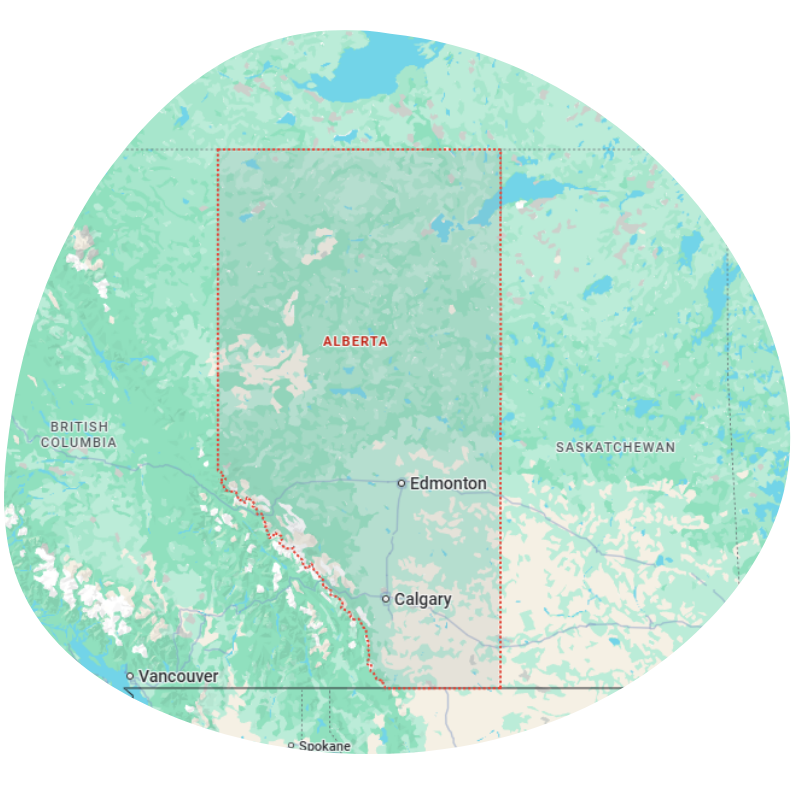
Virtual
Across Alberta
Virtual sessions are available for clients who are physically located in Alberta at the time of their appointment.
Learn about virtual counsellingFlexible Access
Whether you prefer meeting in person or from the comfort of your own space, therapy follows the transition you are actually living through, including your relationships, responsibilities, values, uncertainty, grief, hopes, and the decisions in front of you.
Frequently Asked Questions
Questions about life transition counselling.
You do not need a diagnosis or a crisis to come to therapy during a transition. Here are answers to some common questions about what this kind of counselling can look like.
Do I need a referral to begin life transition counselling?
No. You can self-refer for counselling. You do not need a referral from a family physician or psychiatrist to book a consultation or begin therapy.
If you already work with a physician, psychiatrist, or another health care provider, I can collaborate with them with your written consent.
What counts as a life transition?
A life transition can be any meaningful shift that changes how you understand your life, relationships, identity, responsibilities, or future. It does not have to be dramatic and it does not have to be negative.
Career changes, moves, relationship beginnings or endings, graduation, retirement, parenthood decisions, diagnosis, caregiving changes, loss, shifting friendships, changes in faith or identity, and quieter periods of questioning can all bring people to therapy.
How many sessions will I need?
The number and frequency of sessions depend on what you are moving through and what kind of space feels useful.
Some clients come weekly for a period of active change. Others use therapy biweekly or more periodically as a place to think, process, and make decisions. Life transition work does not have to follow a predetermined number of sessions.
We regularly review whether the pace of therapy continues to feel useful and sustainable.
How much does life transition counselling cost?
Individual counselling sessions are $235 for 60 minutes.
Insurance reimbursement may be available depending on your benefits provider and plan. A receipt is provided after each appointment for submission to your insurance company.
What if the transition is something I wanted?
Absolutely. Wanted change can still be emotionally complicated. A new job can bring grief for an old identity. A move can be exciting and lonely. Ending the right relationship can still hurt. Receiving a long-awaited diagnosis can bring relief and anger at the same time.
Therapy does not require you to choose between gratitude and difficulty. More than one feeling can be true at once.
What happens during the first session?
The first session is a conversation about what brings you in and what this season of life has been like. We may talk about what changed, what feels uncertain, what you are grieving, what you are hoping for, and the people or pressures surrounding the transition.
You do not need to arrive with goals written out. We can discover together what would make therapy feel useful.
What should I do if I am in crisis?
The Right Room is not an emergency or crisis service. If you are at immediate risk of harming yourself or someone else, call 911 or go to the nearest emergency department.
If a transition is also bringing significant depression, hopelessness, substance use, self-harm, or other safety concerns, we can address those directly and create an appropriate support or safety plan as part of your care.
Still Unsure?
A no-cost 15-minute consultation gives you an opportunity to ask questions, discuss what you are looking for, and determine whether working together feels like the right next step.
Meet Your Therapist
Structured care with a real human.
Hi, I’m Hannah Tan, Registered Provisional Psychologist and founder of The Right Room.
I work with adults who are moving through periods of change, uncertainty, identity shifts, relationship transitions, grief, and decisions that do not come with simple answers. My approach to this work is relational and exploratory, drawing from Acceptance and Commitment Therapy, narrative ideas, grief-informed work, values exploration, and other approaches when they are useful rather than forcing the conversation into a fixed protocol.
Life transition counselling is one of the places where I intentionally use less structure. I can offer questions, reflections, clinical perspective, and tools when they are helpful, but I do not assume that uncertainty is a symptom we need to eliminate. Sometimes the work is allowing something new to become clearer in its own time.
You do not have to perform certainty here. We can make room for the part of you that wants change and the part that is afraid of it, the part that knows what it wants and the part that genuinely does not know yet. Therapy can be a room where complexity does not have to be resolved before it is understood.
Ready When You Are
You do not have to know who you are becoming yet.
There are seasons when the old life no longer fits and the new one is not clear yet. If you are looking for a thoughtful, relational place to make sense of that in-between, I would be glad to meet you.